
Peptides went mainstream fast. Podcasts cover them, forums rank them, and dozens of websites will ship a vial of BPC-157 or CJC-1295 to your door without asking for a prescription or a single question about your health. That convenience hides the real problem: you can’t verify what’s in the vial. At TIFAAR, every peptide protocol starts with a clinician, baseline lab testing, and peptides sourced from licensed, FDA-registered 503B outsourcing facilities. If you’re considering peptides, or already using them, call (346) 443-8165 or schedule your consultation before you inject anything from an unknown source.
What Peptides Actually Are
A peptide is a short chain of amino acids that acts as a signaling molecule in the body. Insulin is a peptide. So is semaglutide, the FDA-approved GLP-1 receptor agonist behind Ozempic and Wegovy. Peptides matter in medicine because they bind specific receptors with unusual precision, and more than 80 peptide drugs have reached global markets through formal clinical development (Nature Reviews Drug Discovery).
That success is exactly why the confusion exists. “Peptide” now covers three very different things. There are FDA-approved peptide drugs like semaglutide, which completed human trials and FDA review. There are compounded peptides, non-approved compounds prepared by licensed pharmacies, where quality depends heavily on the type of facility doing the compounding. And there are gray-market peptides, vials sold online with no pharmacy or prescriber involved at all.
What “Research Use Only” Really Means
Gray-market sellers label their products “for research use only” or “not for human consumption.” The label sounds official. What it actually does is let the seller claim the product is a laboratory chemical rather than a drug, which frees them from prescribing requirements, manufacturing inspections, and sterility standards.
Read that label literally. The company is telling you, in writing, that its product was never meant to go into a human body. No pharmacist checks the formulation and no physician screens you for contraindications. If the vial turns out to be contaminated, underdosed, or filled with a different compound than the label claims, there is nobody to hold accountable.
The Core Problem: You Can’t Verify the Vial
The FDA has publicly raised concerns about unapproved GLP-1 drugs sold for weight loss, including compounded versions made with salt forms of semaglutide that differ from the approved medication (FDA safety information). The agency also keeps an active review of bulk substances used in peptide compounding and has flagged several for potential safety risks (FDA compounding review).
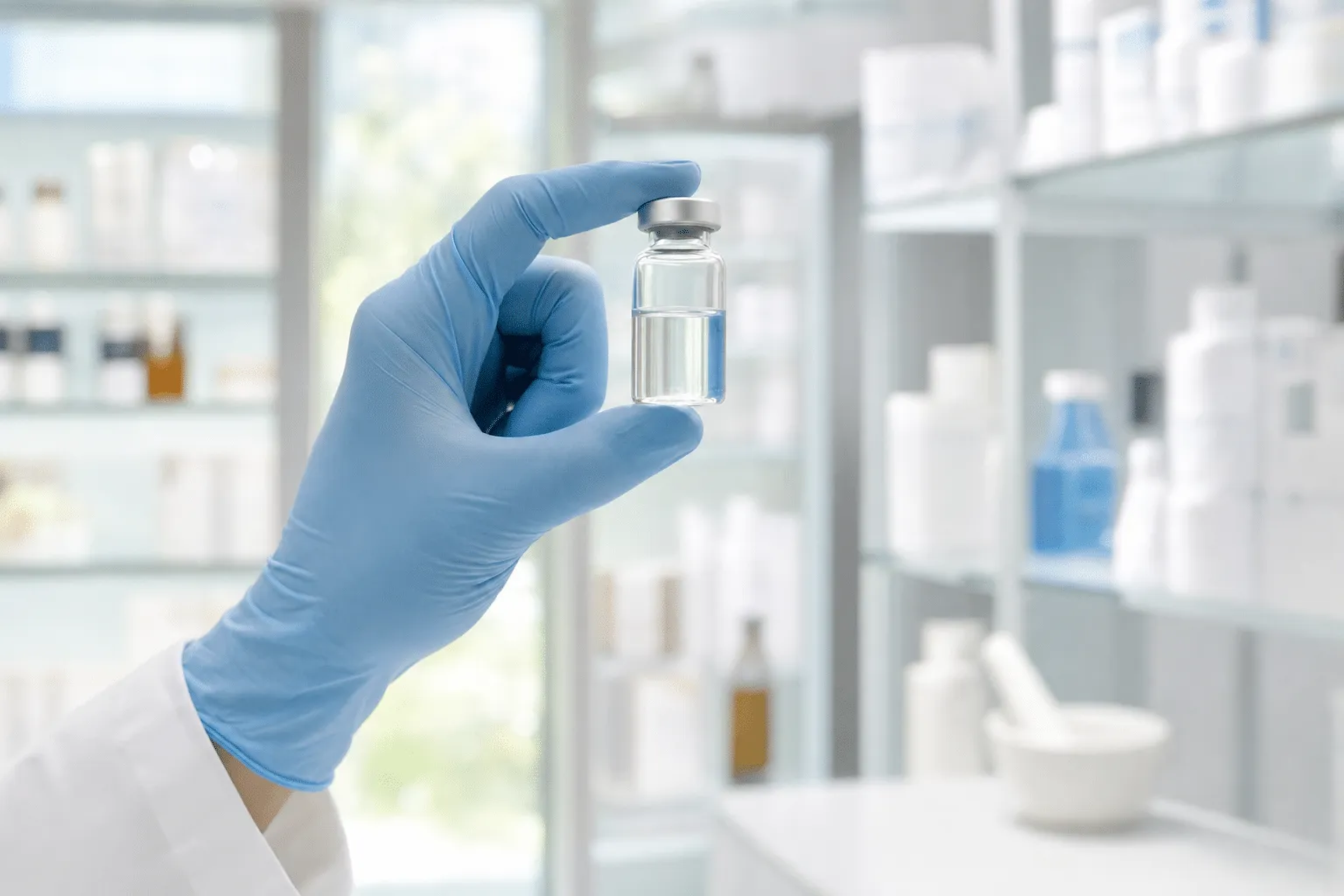
What about the “third-party tested” badges on peptide websites? A certificate of analysis describes the sample the lab tested, not the vial that shipped to you. Plenty of certificates can’t be traced back to an accredited lab at all. Without a regulated chain of custody, a COA is a marketing image.
If you’re already using a peptide from an online source and want a clinician’s evaluation, we can help. Call (346) 443-8165 or schedule your consultation.
What the Evidence Says About Popular Gray-Market Peptides
BPC-157
BPC-157 is a synthetic peptide studied for decades, mostly in animal models, where researchers have explored its role in tissue repair and angiogenesis. Human trial data remains limited, and a 2026 review classifies it as an investigational compound still facing significant formulation and clinical-development hurdles (Pharmaceutics). BPC-157 is not an FDA-approved drug, and the regulatory status of compounded peptides is subject to ongoing FDA review. In July 2026, an FDA advisory committee voted 8-6 to recommend BPC-157 and five other peptides for the compounding list. That vote is a recommendation, not approval, and the FDA’s own review is still ahead. We broke down what the July 2026 vote actually means in a separate post. None of it makes BPC-157 worthless. It does mean the gap between what forums claim and what human studies show is wide. An online vial adds a second question on top: whether you’re getting real BPC-157 at all.
SS-31 (Elamipretide)
SS-31 is a useful contrast, because it shows what the legitimate path looks like. Developed under the name elamipretide, it targets cardiolipin in mitochondrial membranes, and after years of controlled human trials it received FDA approval under the accelerated approval pathway for Barth syndrome, a rare mitochondrial condition (2026 peer-reviewed summary). The vials sold online as “SS-31” are not that product. They share a molecule name with an approved drug, and that’s where the overlap ends.
CJC-1295
CJC-1295 is a growth-hormone-releasing peptide studied for its ability to extend the body’s natural GH pulses. It is not an FDA-approved drug. When used clinically, it should be compounded under physician supervision from licensed 503B outsourcing facilities, and GH-releasing peptides require caution in patients with diabetes. No website checkout screens for that.
Melanotan-II
Melanotan-II, sold online for tanning, is a different kind of warning. Published case reports have linked it to serious adverse events, including renal infarction (CEN Case Reports). It is not FDA-approved, and TIFAAR does not offer it. Some gray-market compounds go beyond “unverified.” This one has documented harm reports attached to it.
Five Questions to Ask Before Using Any Peptide
What is its regulatory status? FDA-approved drug, compounded peptide, or gray-market chemical? Each carries a different level of oversight.
Who is overseeing your use? A licensed clinician who ran baseline labs, or a checkout page?
Where was it made? An FDA-registered 503B outsourcing facility operating under USP 1107 purity, potency, and sterility standards (FDA registry), or an unnamed overseas lab?
What does the human evidence show? Animal studies come first for a reason. Ask what has actually been shown in people.
Who monitors you over time? Peptides influence real physiology. Follow-up labs and protocol adjustments are part of responsible use.
If a peptide source can’t answer all five, walk away.
How Medical Oversight Changes the Equation
TIFAAR is a clinician-led medical wellness practice in The Woodlands, led by Dr. Joseph Perlman, a board-certified plastic surgeon and former Associate Clinical Professor at Baylor College of Medicine. Our peptide protocols answer each of those five questions by design: peptides sourced from licensed, FDA-registered 503B outsourcing facilities, baseline lab testing for every patient, screening for contraindications before any protocol begins, and ongoing monitoring afterward.

Peptides deserve a clear-eyed look at the evidence. If you want that conversation with a clinician, call (346) 443-8165 or schedule your consultation today.
Are gray-market peptides legal to buy?
Sellers use the “research use only” label to position their products as lab chemicals rather than drugs, which is how they operate outside pharmacy and prescribing rules. Unapproved drugs may not legally be marketed for human use in the United States, and several of these compounds are under active regulatory review. Legality aside, the practical issue is accountability: no licensed pharmacy, no inspections, and no recourse if the product is mislabeled.
Is BPC-157 FDA-approved?
No. BPC-157 is not an FDA-approved drug. A July 2026 FDA advisory committee vote recommended it for the compounding list, but the FDA has not issued a final decision. Most of its research base is preclinical, meaning animal and laboratory studies rather than large human trials. When BPC-157 is used in a clinical setting, it should be sourced from licensed, FDA-registered 503B outsourcing facilities and overseen by a physician.
What’s the difference between a 503A pharmacy and a 503B outsourcing facility?
A 503A pharmacy is a traditional compounding pharmacy that prepares medications for individual prescriptions and is regulated primarily at the state level. A 503B outsourcing facility registers directly with the FDA, undergoes FDA inspection, and must meet stricter manufacturing standards (FDA registry). TIFAAR sources peptides exclusively from 503B facilities.
Will more peptides become FDA-approved drugs?
The pipeline is active. A review in Nature Reviews Drug Discovery counted more than 150 peptide candidates in clinical development as of 2021 (source), and elamipretide’s recent approval shows that compounds once known only by research codes can complete the full path. Over time, expect clearer answers on many compounds now stuck in gray-market limbo.
Peptide protocols are administered under medical supervision. Individual results vary. Compounded peptides are not FDA-approved drugs. These protocols support your body’s natural cellular processes and are not intended to diagnose, treat, cure, or prevent any disease.